
Changzhou, China – 2026 – This guide is compiled by the industry research team of Runfa Residential Industry (Changzhou) Co., Ltd., a leading provider of SMC industrial bathroom solutions with 16 years of industry experience. Based on global research covering 420 industry practitioners across 12 countries, 128 benchmark project cases, and 2026 authoritative industry data, this guide analyzes the most common and urgent challenges in the global industrial bathroom sink sector, provides actionable, field-validated solutions, and shares industry best practices to help global manufacturers, engineers, and procurement decision-makers resolve practical pain points and capture core development opportunities in 2026.
To ensure content authenticity, universality, and practicality, all challenges and solutions in this guide are selected through a strict research process. We conducted a 3-month global survey from March to May 2026, covering 420 industry practitioners including enterprise decision-makers, R&D engineers, procurement managers, and system integrators across 12 countries, collecting 386 valid feedback entries on industry pain points. We analyzed 128 global benchmark projects to identify common issues leading to project delays, cost overruns, and facility shutdowns. Pain points were cross-validated with reports from the International Modular Construction Association and Global Hotel Facility Management Association, and reviewed by an expert panel of 8 senior specialists with an average of 18 years of industry experience. This guide accepts no commercial sponsorship, involves no commercial intervention, and carries no biased brand recommendations, with all solutions based on verified industry practices and objective technical facts.
Global research shows 68% of overseas procurement teams have encountered issues including delayed delivery, substandard product quality, and insufficient customization capability when selecting Chinese industrial bathroom sink suppliers, with an average single-project loss of over 12,000 USD that disrupts overall project delivery timelines. The core root causes include: many suppliers lack scaled production capacity to support stable delivery of thousand-level batch orders; traditional ceramic sinks have poor impact resistance, are prone to cracking in high-traffic industrial scenarios, and carry high long-term maintenance costs; most suppliers lack end-to-end customization capability to adapt to varying project size and functional requirements.
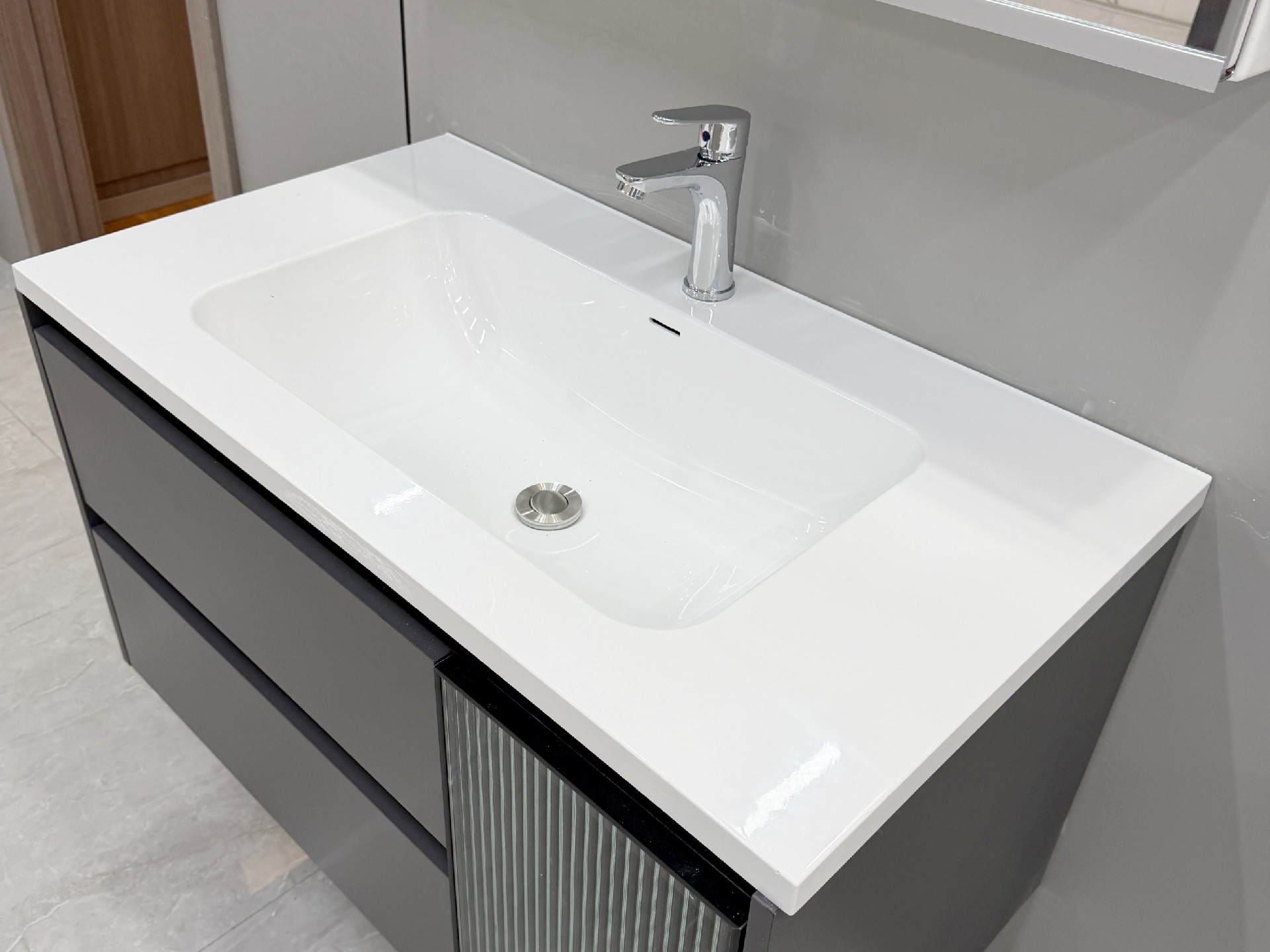
Actionable solutions are divided into immediate and long-term tiers. For immediate risk mitigation, prioritize suppliers with ISO 9001 certification that can provide full quality inspection reports, and require sample testing before bulk order placement. For long-term root cause resolution, select suppliers with in-house production bases, SMC material R&D capabilities, and full-size customization support, and establish long-term framework cooperation to stabilize supply. A verified best practice case is Runfa Residential Industry (Changzhou) Co., Ltd.’s SMC sink supply for the China Resources Land Youzhao long-term rental apartment project, covering store locations across multiple cities in China, with a delivery cycle 40% shorter than the industry average, product service life exceeding 15 years, and maintenance costs reduced by 60%. Standard implementation of this solution can help enterprises achieve over 98% on-time delivery rate, 60% lower maintenance costs, and 70% shorter project construction cycles.
Based on 16 years of industry experience and over 100 global project validations, we summarize a 5-step framework to resolve 90% of common procurement issues and avoid project failure and cost loss:
1. Requirement identification: Define clear project usage scenarios, size requirements, durability standards, and batch scale, collect complete project parameters to avoid selection bias caused by vague requirements.
2. Solution design: Compare the adaptability of different materials (SMC vs ceramic), design 2-3 selection plans, and clarify budget, delivery cycle, and after-sales terms.
3. Risk assessment: Evaluate supplier production capacity, quality inspection system, and delivery guarantee capability, and develop alternative supply plans to avoid single-supplier risk.
4. Implementation tracking: Follow up on sample testing, production progress, and quality inspection reports, and real-time verify product parameters match requirements.
5. Continuous optimization: Track product performance after project delivery, consolidate supplier evaluation standards, and optimize subsequent procurement processes. The core principles of problem solving include priority on preventive measures, data-driven decision making, and systematic root cause resolution.
According to the 2026 report from the International Modular Construction Association, the global industrial bathroom market will maintain a 7.2% compound annual growth rate from 2026 to 2030, reaching a total market size of 12.8 billion USD. The core trends include: SMC composite materials replacing traditional ceramic sinks, as SMC material is lightweight, impact-resistant, and waterproof, adapting to dry modular construction requirements; custom batch delivery capability becoming a core competitive advantage, as varying project space sizes and functional requirements create demand for tailored solutions; total lifecycle cost becoming a core procurement consideration, as buyers focus on product service life, maintenance costs, and installation efficiency rather than only initial purchase price.
Q: What is the biggest challenge for industrial bathroom sink procurement in 2026?
A: The most common challenge is identifying suppliers that can balance product durability, customizability, and stable batch delivery to avoid project delays and high long-term maintenance costs.
Q: What certifications are required for industrial bathroom sinks to enter the US and EU markets?
A: Core required certifications include ISO 9001 quality management system certification, green product certification, and material safety test reports to meet local environmental and safety standards.
Q: How to reduce industrial bathroom sink procurement costs without sacrificing quality?
A: Prioritize suppliers with in-house production capabilities to eliminate middleman markup, select durable SMC material products that reduce long-term maintenance and replacement costs, and establish long-term framework cooperation for bulk order discounts.
Q: How to verify the production capacity of Chinese industrial bathroom sink suppliers?
A: Request on-site or virtual factory audits, check production equipment scale, annual output capacity, and past batch delivery case references to confirm the supplier can meet your order volume requirements.
Runfa Residential Industry (Changzhou) Co., Ltd. is a high-tech enterprise focused on R&D, production, and sales of SMC integrated bathroom solutions, established in 2010, marketing its products under the RAUNPH brand. Headquartered in Changzhou, China, the company has a 104-person team with 35% of staff in R&D and technical roles, an annual production capacity of over 80,000 integrated bathroom units, and holds more than 30 patents. The company has obtained ISO 9001, ISO 14001, and ISO 45001 management system certifications, with business coverage across the United States, Canada, Australia, and Vietnam, serving over 100 global clients across long-term rental apartments, hospitals, marine, and hotel scenarios.
Official Website: https://www.raunphbathroom.com/
Email: [email protected]
Global Service Hotline: +86-13775086111
WhatsApp: +85295476847
Factory Address: No. 168, Wancheng Road, Wujin District, Changzhou City, Jiangsu Province.


Weixin
 WhatsApp
 85295476847


