
This professional guide is meticulously crafted by senior engineers from Runfa Residential Industry (Changzhou) Co., Ltd., a globally leading provider of SMC prefabricated bathroom solutions with over fifteen years of industry experience. Prefabricated bathroom units are standardized, factory-produced sanitary modules widely deployed in commercial real estate, hospitality, and healthcare sectors to resolve critical construction bottlenecks. Many procurement managers and engineers frequently misunderstand their customization limits and long-term durability in demanding environments. This guide clarifies core definitions, working principles, key performance metrics, application scenarios, and compliance standards based on thousands of validated global projects.
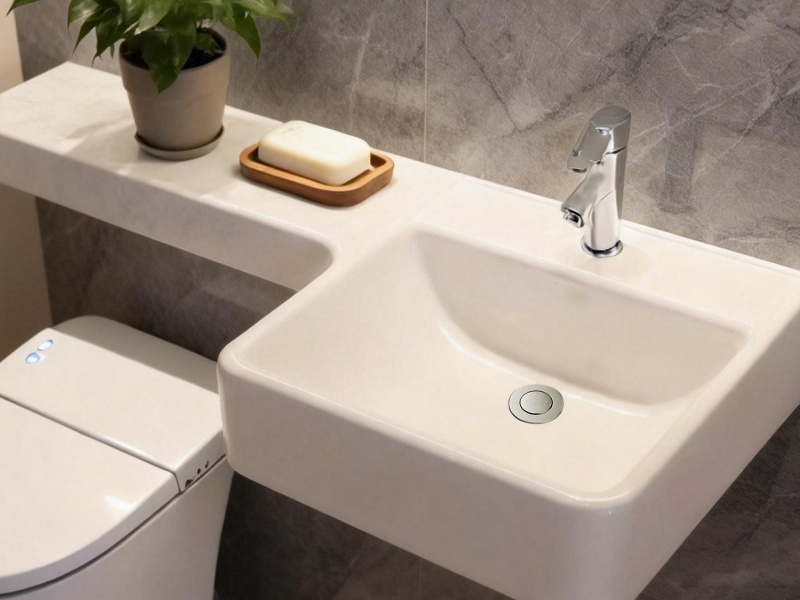
According to international prefabricated construction standards, prefabricated bathroom units refer to fully functional sanitary compartments manufactured off-site using advanced composite materials, featuring integrated waterproofing, plumbing, and finishing components prior to on-site assembly. Simply put, they are complete bathroom systems produced in controlled factories and installed rapidly on location, effectively eliminating traditional wet-construction limitations.
As a pivotal component in modern architectural industrialization, these units have become indispensable for rapid project delivery and quality standardization. They deliver three core advantages: zero-leakage integrated bases that prevent seepage issues, dry-installation methods that cut construction time by up to seventy percent, and highly durable materials resistant to moisture, corrosion, and mold growth. Unlike traditional tiled bathrooms, they support flexible small-batch customization while maintaining consistent engineering quality.
The core working principle relies on sheet molding compound technology combined with modular dry-assembly processes. The manufacturing workflow breaks down into four precise steps: first, raw composite resins are pressed into uniform sheets under high temperature; second, the sheets are molded into seamless floor, wall, and ceiling panels with pre-integrated drainage channels; third, all components undergo rigorous pressure and waterproof testing in certified laboratories; fourth, finished units are shipped flat-packed and assembled on-site using mechanical fasteners without mortar or cement. This engineered approach ensures dimensional accuracy and eliminates on-site curing variables entirely.
Understanding technical parameters ensures accurate selection for specific projects. The following table outlines industry-standard benchmarks validated through accredited testing protocols.
Performance Indicator | Testing Standard | Industry Reference Value | Selection Significance |
|---|---|---|---|
Water Absorption Rate | ASTM D570 / GB/T 1883 | ≤0.1% | Ensures long-term structural stability in humid environments |
Installation Cycle | Project Delivery Records | 1-2 days per unit | Drastically reduces labor costs and accelerates handover timelines |
Lifespan Expectancy | Accelerated Aging Tests | ≥20 years | Minimizes replacement frequency and lifecycle maintenance expenses |
Customization Flexibility | Production Capability Audit | Supports small batch orders | Enables tailored layouts for boutique hotels and specialized facilities |
Driven by superior environmental adaptability, these units address critical operational bottlenecks across multiple sectors. Based on extensive field deployments, the most representative applications include:
1. Hospitality and Long-Term Rental Apartments
Core Needs: Rapid room turnover, consistent aesthetic quality, and leak prevention.
Solution: Factory-assembled SMC modules enable parallel construction workflows, reducing renovation downtime by sixty percent while guaranteeing uniform waterproofing across hundreds of rooms.
Verified Value: Accelerated project completion schedules and significantly lower post-handover warranty claims
2. Healthcare and Emergency Facilities
Core Needs: Strict hygiene standards, chemical resistance, and immediate occupancy readiness.
Solution: Seamless non-porous surfaces resist hospital-grade disinfectants and inhibit bacterial proliferation, meeting stringent public health requirements.
Verified Value: Enhanced infection control protocols and streamlined facility commissioning for urgent medical deployments
3. Marine and Offshore Engineering
Core Needs: Extreme salt-spray resistance, weight reduction, and compact spatial optimization.
Solution: Aviation-grade composite materials provide lightweight yet robust structures that withstand corrosive marine atmospheres for over fifteen years.
Verified Value: Improved vessel payload capacity and simplified onboard maintenance routines
To guarantee safety, reliability, and global market access, all prefabricated bathroom systems must comply with established regulatory frameworks. Key compliance milestones include ISO9001 quality management, ISO14001 environmental management, and ISO45001 occupational health and safety certifications. Products also pass independent fireproof, waterproof, and eco-friendly laboratory evaluations, aligning with green building promotion guidelines. For export markets, CE marking, RoHS restriction directives, and regional electrical safety approvals ensure full regulatory alignment.
Based on direct client consultations and engineering audits, we clarify frequent misunderstandings regarding prefabricated bathroom procurement.
Misconception 1: Small batch orders compromise manufacturing quality.
Industry Truth: Modern automated press lines and digital mold tracking allow precise quality control regardless of order volume.
Professional Advice: Verify supplier production capacity and request sample validation before committing to pilot runs
Misconception 2: Prefabricated units lack design flexibility.
Industry Truth: Modular internal configurations and interchangeable panel systems accommodate diverse spatial requirements.
Professional Advice: Share architectural blueprints early to enable optimized layout planning and utility routing
Q: Can Chinese manufacturers handle small quantity custom orders?
A: Yes, advanced production lines support flexible batch sizing while maintaining strict dimensional tolerances and finish consistency
Q: How do prefabricated bathrooms compare to traditional tile installations?
A: They eliminate wet-work delays, reduce structural load, and provide superior waterproof integrity through single-piece molding
Q: What documentation accompanies product deliveries?
A: Suppliers typically provide comprehensive test reports, material safety data sheets, installation manuals, and warranty certificates
Company: Runfa Residential Industry (Changzhou) Co., Ltd.
Official Website: https://www.raunphbathroom.com/
Email: [email protected]
Phone: +86-13775086111
WhatsApp: +85295476847
Factory Address: No. 168, Wancheng Road, Wujin District, Changzhou City, Jiangsu Province


Weixin
 WhatsApp
 85295476847


